The 2026 Flag Plant: Jadarian Price
A first-round pick starting Week 1 for the defending Super Bowl champions is going as RB26. This is the call, made before anybody plays a game.

SEATTLE — Every year since 2017 I have picked one rookie running back and committed to him before the season starts. Not a sleeper list, not a tiered ranking with hedges built in. One name, before any evidence exists, graded honestly when the year is over.
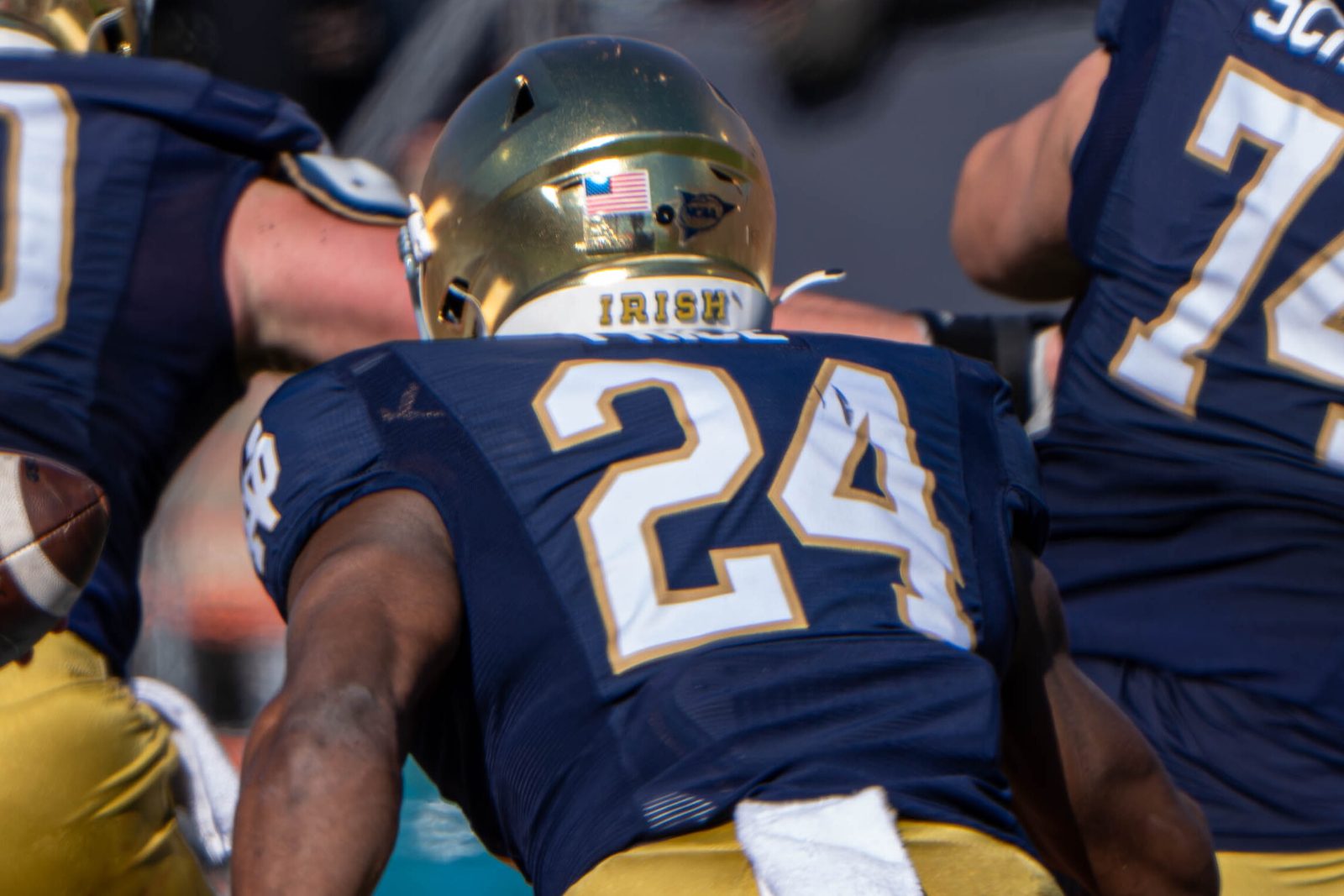
This year it is Jadarian Price, and I have been looking forward to writing this one all summer.
He is the last pick of the first round, he is the Week 1 starter for the defending Super Bowl champions, and he is being drafted as the 26th running back off the board. Read that again. That is the entire reason we are here.
What Is Actually Open in Seattle
Kenneth Walker III left in free agency. Zach Charbonnet tore his ACL in January, had reconstructive surgery in February, and opens the season on the PUP list, which by rule means a minimum of four games.
Here is what those two accounted for last season:
| Carries | Receptions | Touches | Rush TD | |
|---|---|---|---|---|
| Kenneth Walker III | 221 | 31 | 252 | 5 |
| Zach Charbonnet | 184 | 20 | 204 | 12 |
| Combined | 405 | 51 | 456 | 17 |
Two hundred and fifty-two touches gone for good. Another two hundred and four unavailable for at least the first quarter of the season.
And this is not a small pie. No team in the NFL gave its running backs more carries than Seattle last season, and no team gave its running backs more red zone carries either. The volume is already there. It has been there for years. It just needs somebody to take it.
The goal-line detail is the one I keep coming back to. Charbonnet's twelve rushing touchdowns led the team and made him the first Seattle player since Marshawn Lynch in 2014 to reach double digits. That role currently has no incumbent to start the season.
The Walker Comparison
This is the cleanest way I can make the argument. He is, after all, a former flag plant of mine, so it feels fitting.
Kenneth Walker ran for 1,027 yards in this exact offense last season. He played all seventeen games. He finished RB22 in total half-PPR points and RB29 in points per game, averaging 10.4.
A thousand-yard rusher on the eventual Super Bowl champion, and he was at times a questionable fantasy asset.
Why? Because he split everything. He shared passing-game work with Charbonnet, and in games where Charbonnet was active, Walker saw only 34.8% of the running back red zone rushing work. He was not being failed by the offense. He was being failed by the arithmetic of a two-man committee.
Price does not have to split to start. Not in September, and I do not think in November either.
So Why Is He Cheap?
Three reasons, and all three are fair. I would rather name them than wave at them.
One: Charbonnet comes back. PUP means four games minimum, so realistically Week 5 or later, coming off a reconstructed knee. This is the objection everybody makes.
Two: Price has only 113 college carries. He split the Notre Dame backfield with Jeremiyah Love, who went third overall to Arizona. Nobody has seen Price carry a real workload, at any level, ever.
Three: there is an Achilles tear in his history and he is 203 pounds. Evaluators flagged both: durability concerns lingering from the injury, and a lighter frame that raises questions about a bell-cow workload.
And one more, quietly: he did not play a preseason snap. Lower-body soreness cost him a week of camp and Seattle kept him in street clothes for all three exhibition games. Reports since have him at full go and running with the starters, but the first time anyone sees him carry the ball in an NFL uniform will be Week 1. That's part of the price too.
The Gibson Comp
This one feels familiar, and I want to say why before somebody else does.
In 2020 my call was Antonio Gibson. A college wide receiver Memphis had started handing the ball to, electric with it, and with a college carry count so small that nobody could tell you what he was. The unknown pushed him down the NFL draft board to the third round, and then fantasy forgot about him entirely. He went in the double-digit rounds. He finished as the RB12.
Price is the same shape of player at a higher price point. Fewer college carries than anyone is comfortable with, an obvious trait on tape that the carry count cannot show, and a market that treats "we have not seen it yet" as "it is not there." With Gibson, the situation was a Washington backfield with nobody else. With Price, it is a champion's backfield with nobody else for a month and a run game coordinator calling plays.
I was early on Gibson because I trusted the trait over the sample. That is exactly the bet here, and the record says it has paid off more often than not.
The Part Nobody Is Talking About
Klint Kubiak left Seattle to become head coach of the Las Vegas Raiders. The Seahawks replaced him with Brian Fleury.
Fleury spent seven seasons in San Francisco. His most recent title there was tight ends coach and run game coordinator. He has been in Kyle Shanahan's orbit since Cleveland in 2014.
Now read that again next to the table above.
A team that just vacated 456 backfield touches handed play-calling to a run game specialist from the Shanahan tree.
That system has been manufacturing usable fantasy running backs for two decades, largely independent of pedigree. That is the entire history of the scheme, from Denver through Cleveland through San Francisco. And the archetype it is built around is a one-cut back with vision and burst who can press a hole and get vertical.
Every scouting report on Price says the same things. Outstanding vision beyond the line of scrimmage. Big-time acceleration and long speed. Low center of gravity, good knee bend, patient with clean footwork. Specializes in creating chunk plays.
You do not have to squint to see it. That is a team drafting for a scheme and then hiring the coach who runs it.
There is continuity here too, which matters. Kubiak and Fleury share the same coaching lineage, so Seattle did not change offensive philosophy. They changed the person calling it. The fit that justified spending pick 32 on Price in April is intact.
The honest risk: Fleury has never called plays. Not in the NFL, not in college, not anywhere. That is a real unknown, and it is part of why a first-round back on the defending champion is available in the fifth round.
What the History Says
Since 2016, fourteen running backs have been taken in the first round. Thirteen of them played as rookies.
| Year | Player | Pick | PPG rank |
|---|---|---|---|
| 2016 | Ezekiel Elliott | 4 | RB3 |
| 2017 | Leonard Fournette | 4 | RB6 |
| 2017 | Christian McCaffrey | 8 | RB13 |
| 2018 | Saquon Barkley | 2 | RB2 |
| 2018 | Rashaad Penny | 27 | RB75 |
| 2018 | Sony Michel | 31 | RB31 |
| 2019 | Josh Jacobs | 24 | RB13 |
| 2020 | Clyde Edwards-Helaire | 32 | RB23 |
| 2021 | Najee Harris | 24 | RB9 |
| 2021 | Travis Etienne | 25 | missed season |
| 2023 | Bijan Robinson | 8 | RB17 |
| 2023 | Jahmyr Gibbs | 12 | RB11 |
| 2025 | Ashton Jeanty | 6 | RB17 |
| 2025 | Omarion Hampton | 22 | RB15 |
Half-PPR points per game among all running backs, minimum six games. Data: nflverse.
Five of thirteen finished as top-12 backs per game. Eleven of thirteen finished top-24. The two who didn't, Penny and Michel, were both 2018 picks who walked into backfields they had to share, and one of them was hurt. That's the whole bear case in one row of a table: the workload, not the talent.
Which brings me to the comp I have to acknowledge, because somebody in my replies will if I do not: Clyde Edwards-Helaire was also the 32nd pick, and he is the RB23 near the bottom of that list.
The difference is workload security. Edwards-Helaire walked into a healthy Kansas City backfield and immediately started sharing. Price walks into a backfield where the two men who took 456 touches last year are gone and hurt, and the depth behind him is George Holani, an undrafted free agent with 25 carries across two NFL seasons, and journeyman Emanuel Wilson.
The committee argument requires somebody to form a committee with. For the first month, there is not one.
What the Model Says
I should tell you where the numbers land before I tell you where I do. They are not the same thing, and this site is built on showing both.
The projection model behind the rankings starts from Seattle's team totals, gives Price a conservative share of them (I set it lower than I believe, on purpose) and comes out with him as RB17, 39th overall, before any judgment is applied. That is with no film, no gut, no Fleury argument. Just vacated volume and a share of it.
The market has him RB26. The model has him RB17 on shares alone. Everything below is the case for why even the model is too low.
The Film
As I have described before, it all starts with film, and that is where I started with Price too. Like Dalvin, I knew pretty quickly this was my guy this year.
What I saw: the speed. He has a real knack for breakaway chunk plays, and the long speed to finish them off. He is elusive and strong. He can break tackles, and the way he moves east-west, changes gears and finishes a play is a lot of what I saw in Dalvin and Gibbs. That is why I see Price in a similar light.
See for yourself. These are his college highlights, and the traits above are all in the first minute.
The Call
Jadarian Price. RB26 today, and I think that number looks silly by November.
I will grade this in January the same way I grade all of them, and I cannot wait to see how it goes. The full record is here: seven calls over nine years, the ones that hit and the ones that did not. That is the whole point of writing it down before the games are played. An opinion you cannot check is not worth reading.